
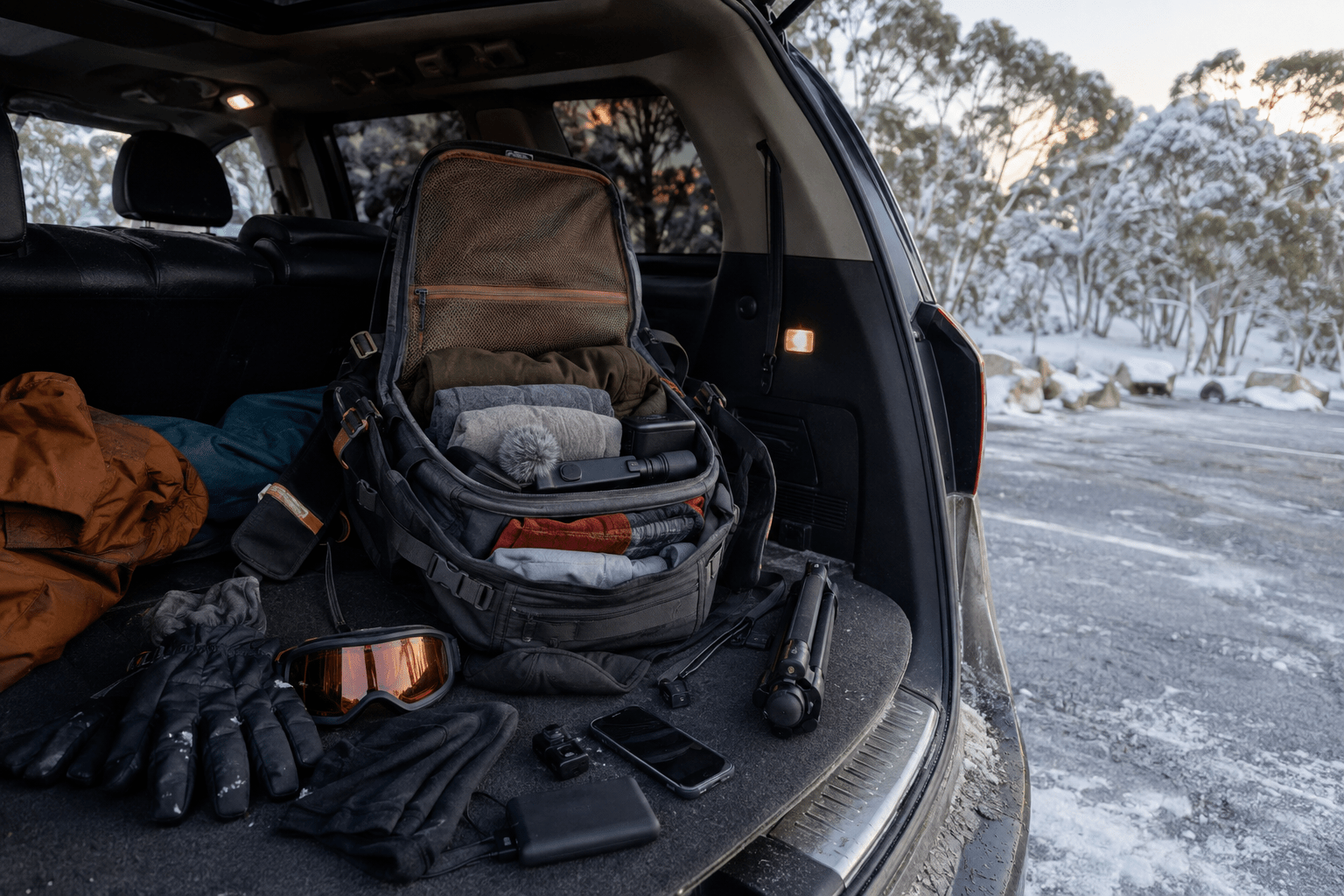
An Australian snow trip can be very different from an ordinary weekend away.
Cold temperatures, wet gloves, bright snow, changing weather and limited space mean the things that work perfectly at home may suddenly become inconvenient on the mountain.
If you plan to capture photos and videos with your smartphone, you don't need to carry a backpack full of camera equipment. A small, well-planned setup is usually more useful.
Here are a few things worth considering before heading to the snow this winter.
1. Start With Less Gear, Not More
It's tempting to pack every accessory you own, especially when you're visiting somewhere you don't get to see every day.
But once you're wearing a winter jacket, carrying gloves, food, water and other essentials, additional camera equipment quickly becomes noticeable.
Think about the moments you're most likely to capture: family photos, mountain views, short walking videos, a few clips around the village and perhaps some commentary during the trip.
Choose equipment around those moments rather than trying to prepare for every possible shot.

2. Pack Something That Lets Everyone Get in the Photo
Snow trips naturally create group-photo moments.
It might be the first view of the mountain, everyone standing beside the car after arriving, children playing in the snow or the whole family together before heading home.
A compact selfie stick tripod is useful because it can stay folded inside a backpack and be set up when you want a stable group photo or wider scenic shot.
Models such as the SDT-MAX and SDT-PRO combine handheld shooting with tripod functionality, making them practical when you don't want to carry separate pieces of equipment.
Explore ROODTUO Selfie Sticks & Tripods

3. Think About Movement Before Packing a Gimbal
A gimbal isn't necessary for every snow trip.
If you're mainly taking photos and short clips, a compact tripod may be all you need.
But if you're planning to record longer walking sequences through an alpine village, accommodation area or scenic trail, stabilisation becomes much more useful.
A smartphone gimbal such as the Smart Cyclone can help reduce the small movements that become especially noticeable when you're walking carefully over uneven or slippery ground.
Explore ROODTUO Smartphone Gimbals & Stabilizers

4. Wind Can Ruin a Video You Thought Was Perfect
Mountain weather can change quickly, and wind is one of the easiest things to underestimate.
You may record a great piece of commentary at a lookout only to discover later that your voice is buried underneath wind noise.
If talking to camera is part of your trip, a compact wireless microphone is easier to manage than relying entirely on the phone's built-in microphone from a distance.
Keep the microphone and its accessories somewhere easy to reach rather than at the bottom of your luggage.
Explore ROODTUO Wireless Microphones
5. Snow Is Bright — Use It Creatively
Fresh snow reflects a huge amount of light. That can make winter scenes beautiful, but it can also create glare and strong reflections.
Instead of photographing only large landscapes, look for smaller details: sunlight reflecting from ice, ski goggles, frozen branches, footprints and patches of colour against the snow.
If you enjoy experimenting with mobile photography, different smartphone lenses can also give you more options for wide landscapes and close-up winter details.
Explore ROODTUO Smartphone Lens Accessories

6. Keep Your Phone Accessible — But Protected
A phone buried underneath several layers of clothing isn't much use when something happens unexpectedly.
At the same time, leaving it exposed to snow and moisture isn't a good idea either.
Keep your phone somewhere protected but easy to reach. Before putting it away, check that it isn't covered in melting snow or moisture.
Also remember that batteries can behave differently in very cold conditions. Starting the day with a fully charged phone and keeping it relatively warm when you're not using it is a sensible habit.
7. Don't Spend the Entire Trip Looking Through Your Screen
This might be the most important thing to pack: a plan to put the phone away.
You don't need to record every chairlift ride, every patch of snow or every meal.
Capture a few establishing shots, some details, the people you're travelling with and the moments that genuinely feel different from everyday life.
Then enjoy the mountain.
When you look back at the footage later, a small collection of meaningful clips will often tell the story better than hundreds of nearly identical videos.
Final Thoughts
The ideal smartphone setup for an Australian snow trip should be compact enough that carrying it never becomes a chore.
For most people, that means choosing a versatile tripod or selfie stick first, then adding stabilisation, audio or lens accessories only when they match the way you actually plan to shoot.
Pack light, keep your phone accessible and concentrate on capturing the moments that make a winter trip worth remembering.
Share:
How to Capture Better Snow Photos and Videos With Your Smartphone
How to Film Better Cooking Videos With Your Smartphone