
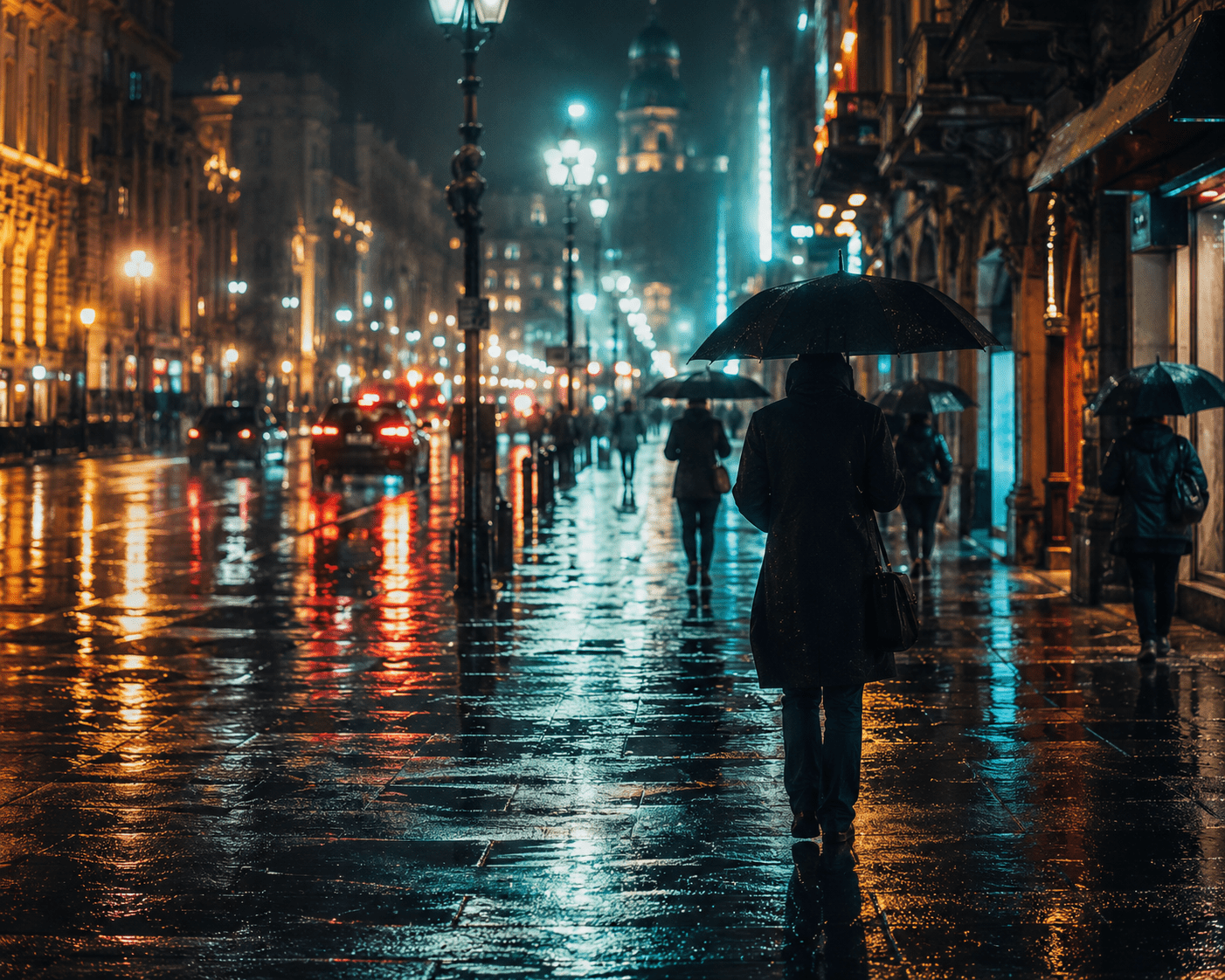
There’s a reason rainy scenes always feel different on camera.
Even an ordinary street can suddenly look cinematic after it rains.
The reflections become softer. The lights feel richer. The atmosphere feels heavier and more emotional.
And surprisingly, smartphones are often very good at capturing this kind of mood.
Rain changes the entire visual texture of a scene.
1. Wet Surfaces Create Reflections Everywhere
One of the biggest reasons rain looks cinematic is reflection.
After rain, streets and sidewalks start reflecting:
- Neon signs
- Car lights
- Street lamps
- Storefront colors
These reflections create depth and movement inside the frame.
Without rain, many streets simply look flat.
With rain, the same location suddenly feels alive.
2. Low Light Creates More Atmosphere
Rainy weather usually softens sunlight and reduces contrast.
This often creates:
- Softer shadows
- More balanced highlights
- Better mood lighting
- A more cinematic tone overall
Bright sunny days can sometimes feel too clean and harsh on smartphone cameras.
Rain naturally adds texture and emotion.
3. Movement Looks Better in Rain
Rain also changes the way movement feels on camera.
Things like:
- People walking with umbrellas
- Cars passing through reflections
- Water splashing under shoes
- Steam rising from food stalls
All create natural motion inside the frame.
Even slow walking shots become more visually interesting.
For travel creators, lightweight handheld setups often work better in rain because they allow faster movement between locations.
View ROODTUO Selfie Sticks & Compact Travel Gear
4. Small Lights Look More Powerful at Night
Rainy environments naturally darken the scene.
This means even small light sources become more noticeable:
- Street signs
- Cafe lights
- Traffic lights
- Portable creator lights
A small fill light can help softly illuminate faces without destroying the rainy atmosphere.
The goal is not to remove the darkness completely.
The goal is to keep the mood while making the subject visible.
View the WL62 Portable Fill Light

5. Rain Forces You to Notice Details
Rainy scenes often work best when you stop filming everything wide.
Instead, focus on details:
- Raindrops hitting a table
- Reflections under shoes
- Water moving through light
- Hands holding warm drinks
- Foggy windows
Small details create emotional footage.
This is why rainy videos often feel more immersive than normal travel clips.
6. Stable Shots Matter More in Low Light
Low-light scenes are naturally harder for smartphones.
Small hand movements become more visible at night.
Keeping your shots steady helps preserve detail and prevents footage from looking messy.
Simple portable tripods are useful for:
- Static rainy street shots
- Night timelapses
- Cafe table filming
- Solo travel footage

7. Sound Matters More Than You Think
Rain videos are not only visual.
The sound is part of the atmosphere too:
- Rain hitting umbrellas
- Cars moving through water
- Distant traffic
- Footsteps on wet streets
Even subtle ambient sound can make rainy footage feel far more cinematic.
If recording voice clips outdoors, small mobile microphones can help separate your voice from environmental noise.
View ROODTUO Mobile Microphones
Conclusion
Rain changes the mood of a scene in ways that smartphone cameras capture beautifully.
Reflections, movement, atmosphere, low light, and ambient sound all combine to make rainy footage feel cinematic and emotional.
You don’t need expensive camera gear to capture this feeling.
Sometimes you just need the right moment — and the patience to notice small details.
Share:
Why Night Markets Look Better on Video Than in Real Life
Why Your Travel Videos Still Look Bad Even With an Expensive Phone